
A student is struggling in school and by the end of the school year is unable to complete the work required for the current grade level, what to do. It is the time of the school year that some hard questions and decision will be made, hopefully for the betterment of the student. Does retention serve the student well? Do the benefits, if any, out way any side effects of repeating a grade?
There are a few things that stick out in my mind concerning my grade school years, back in the mid to late sixties. Oh My, am I really old enough to put those to time periods together for me, that is scary. One is remembering a boy, Keith, who was held back at least once. He was known in school as the boy who was held back, and the trouble maker of the school. One time our teacher put him in the front of the classroom with his leg wrapped and up on a chair because he use to like to kick and trip kids. Our teacher told us that something was wrong with his leg, so she had to bandaged it up to help it heal, it did not work. For some reason though, he was my protector. No one was allowed to pick on me. I have often wondered what happen to Keith.
My memories of Keith and his behavior seem to match up with resent results of studies on students that are retained to repeat a grade. Back in the early 2000’s with the No Student left Behind Act, the schools stopped the social passing of students to the next grade. The belief was the struggling students just needed more time to mature to fix the gaps in their learning. There has been enough years since the implementation of the act to see the results. These results are not always positive, not even neutral, but adverse. The people behind the No Student Left Behind Act believed they were doing what was best for these students.
Some of the results of these studies show, students that are held back have a higher high school drop out rates, compared to students that were also struggling but were not held back, more negative acting out of students from frustration, embarrassment, misinterpretation of where the flaw lies, and no increase in academic scores, if anything they are lower, in fact, most of these students do not catch up to their school peers. The one predictor that is a constant for high school dropout is retention. For sixth graders, some have said that retention was more stressful then losing a parent or going blind. To read all the studies and more,
Academic Studies
One of the main reasons, back in the early 2000’s for retaining students was the belief that a lack of maturity of the students, was the cause of the struggles in certain areas of academics, and this reasoning continues to this day in schools. Lack of maturity cannot be the problem, especially, when all these struggling student are do well or even above average in other subjects in school. It is not a lack of intelligence or immaturity. In the case of struggles in reading and spelling, it usually is an internal processing issue in the brain, which does not affect intelligence, or hearing, but the ability to process sounds. It is the way the brain was formed in certain people. Time alone will not fix this internal processing issue know as Dyslexia.
Yes, time is needed for the struggling readers and spellers, but time used in a very precise way, intense, one on one, if possible, tutoring, with a curriculum created specifically for dyslexia, without restoring to retention. When done properly, this time, will allow students to close the gap between their reading/spelling and their intelligence, which the gap is usually large, due to their high intelligence. During this time the students need to to be told, and reminded, that their struggle is not due to a lack of intelligence, which for them, is the number reason they believe is the cause of their struggles.
Thank you for your time. I pray this has been of help to you or someone you know.





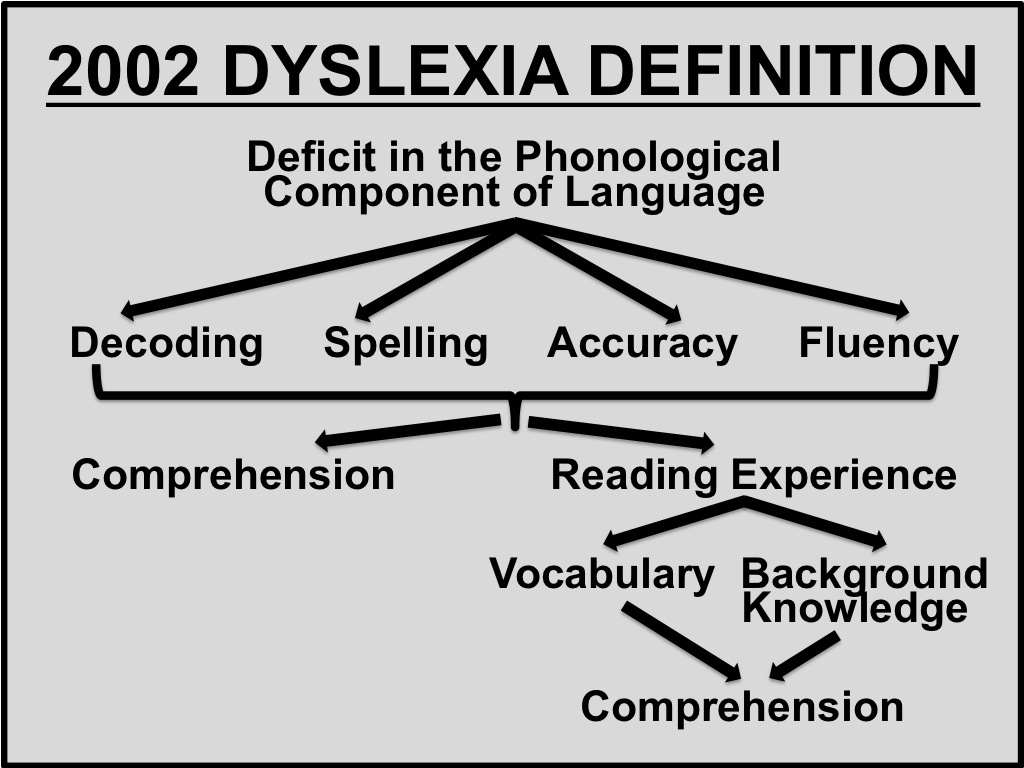 decoding abilities. These difficulties typically result from a deficit in the phonological component of language that is often unexpected in relation to other cognitive abilities and the provision of effective classroom instruction. Secondary consequences may include problems in reading comprehension and reduced reading experience that can impede growth of vocabulary and background knowledge.”
  Kathy Grant Dyslexia Tutor