To Retain or Not Retain, that is the question.

A student is struggling in school and by the end of the school year is unable to complete the work required for the current grade level, what to do. It is the time of the school year that some hard questions and decision will be made, hopefully for the betterment of the student. Does retention serve the student well? Do the benefits, if any, out way any side effects of repeating a grade?

There are a few things that stick out in my mind concerning my grade school years, back in the mid to late sixties. Oh My, am I really old enough to put those to time periods together for me, that is scary. One is remembering a boy, Keith, who was held back at least once. He was known in school as the boy who was held back, and the trouble maker of the school. One time our teacher put him in the front of the classroom with his leg wrapped and up on a chair because he use to like to kick and trip kids. Our teacher told us that something was wrong with his leg, so she had to bandaged it up to help it heal, it did not work. For some reason though, he was my protector. No one was allowed to pick on me. I have often wondered what happen to Keith.

My memories of Keith and his behavior seem to match up with resent results of studies on students that are retained to repeat a grade. Back in the early 2000’s with the No Student left Behind Act, the schools stopped the social passing of students to the next grade. The belief was the struggling students just needed more time to mature to fix the gaps in their learning. There has been enough years since the implementation of the act to see the results. These results are not always positive, not even neutral, but adverse. The people behind the No Student Left Behind Act believed they were doing what was best for these students.

Some of the results of these studies show, students that are held back have a higher high school drop out rates, compared to students that were also struggling but were not held back, more negative acting out of students from frustration, embarrassment, misinterpretation of where the flaw lies, and no increase in academic scores, if anything they are lower, in fact, most of these students do not catch up to their school peers. The one predictor that is a constant for high school dropout is retention. For sixth graders, some have said that retention was more stressful then losing a parent or going blind. To read all the studies and more,
Academic Studies

One of the main reasons, back in the early 2000’s for retaining students was the belief that a lack of maturity of the students, was the cause of the struggles in certain areas of academics, and this reasoning continues to this day in schools. Lack of maturity cannot be the problem, especially, when all these struggling student are do well or even above average in other subjects in school. It is not a lack of intelligence or immaturity. In the case of struggles in reading and spelling, it usually is an internal processing issue in the brain, which does not affect intelligence, or hearing, but the ability to process sounds. It is the way the brain was formed in certain people. Time alone will not fix this internal processing issue know as Dyslexia.

Yes, time is needed for the struggling readers and spellers, but time used in a very precise way, intense, one on one, if possible, tutoring, with a curriculum created specifically for dyslexia, without restoring to retention. When done properly, this time, will allow students to close the gap between their reading/spelling and their intelligence, which the gap is usually large, due to their high intelligence. During this time the students need to to be told, and reminded, that their struggle is not due to a lack of intelligence, which for them, is the number reason they believe is the cause of their struggles.

Thank you for your time. I pray this has been of help to you or someone you know.
retention

Just A Few Moments.

Just a short post today to remind people what a few moments of their time can mean to a child or young person who struggles with dyslexia. The struggles these kids and young people face everyday at school would make the average adult quit their job if they had to face the same thing.

encoragement

Just a few moments of your time to recognize their strengths, character, and perseverance, can last a life time for the these young heroes. Who knows where those few moments of your time will take them in their life.

The Incomplete Truths of Standardized Tests

What are your memories of test taking in school? Did they give you confidence or make you second guess yourself?

People usually group themselves in 1 of 2 categories when thinking about their school years; not having a panic attack with the mention of a test and doing well on them, or having your mind go blank with just the utterance of the word test. With an average of 17 years out of a persons first 22 years spent in school, where intelligence and self worth is measured by standardized testing, a fair amount of the student population’s view of themselves, their capabilities, and future success are being formed and solidified for life based on incomplete and inaccurate information.

I speak from experience. I could not wait to finish high school so I could get a job. Subconsciously, I knew I could do well at a job. I did not realize the very things that would give me success in life out of school were the very things that standardized tests do not measure. At that time my understanding of my intelligence, capabilities and self-worth were based on the standards of the schools and not the real world.

For kids with dyslexia school standardized testing does not measure their strengths, but only their weaknesses. It does not give a score for their perseverance, thinking out of the box, compassion, or creativity, just to name a few things. The skewed outcomes of those tests is why it is so important for kids with dyslexia and their parents to know that standardized testing cannot give a accurate view of current strengths and capabilities let alone a persons future success in life. A lot of people with dyslexia do not see or understand their gifts and strengths until after their school years. One my goals with my students and their families is to help them see the future is not based on standardized testing but on the strengths, along with the weaknesses, of their child and the love of the family.
package

“C” & “G” answer

The letters “C” and “G” have two sounds, their hard sound and their soft sound. The hard sound for C is the /k/sound, the hard sound for G is the /g/sound, the soft sound for C is the /s/ sound, and the soft sound for G the is the /j/sound. The letter that comes right after the C or G in a word determines their sound. My students learn there are 3 times when the “C” and “G” will make their soft sound, with a few exceptions, when a “Watch Out Vowel” follows. You ask, which of the vowels are Watch Out Vowels? Well, E, I and Y. I have my students punch the air as they say them to help them remember. So, if you need a /k/sound and a E, I or Y follow that sound, you will need to use the letter K and if you need the /g/sound, e, i, or y cannot follow the G. Here are a few examples;
/k/sound, Kelly or /s/ sound, cell.
/k/sound, Kit or /s/ sound, cite.
/k/sound, Kyle or /s/ sound, cycle.
/g/sound gab,
/g/sound got,
/g/sound gut,
/j/sound gene,
/j/sound ginger,
/j/sound gypsy.
So remember your “Watch Out Vowels”, they like to control. Punch the air as you say “E”, “I”, “Y” to remember them, and you can take control of your reading and spelling.

Do you know, “C” & “G”?

With “Do you know” posts I will be testing your phonics “why” knowledge and at the same time sharing what my students are learning that allows them to become better readers and spellers. So, here we go.

The letters “C” and “G” make two sounds, we call the sounds their hard sound and their soft sound. What makes these two letters say their hard sound or their soft sound?

I will post the answer on Friday.

The 12 Days of Christmas: Sharing Words of Wisdom and Encouragement

With the Christmas season upon us, I thought I would share some words of wisdom and encouragement, throughout the next few weeks, from people who live with dyslexia and have succeed because of dyslexia.

So, on the first day of Christmas,  Rick Riordan, author of the Percy Jackson book series.

“Dyslexic kids are creative, ‘outside-the-box’ thinkers. They have to be, because they don’t see or solve problems the same way other kids do. In school, unfortunately, they are sometimes written off as lazy, unmotivated, rude or even stupid. They aren’t. Making Percy dyslexic was my way of honoring the potential of all the kids I’ve known who have those conditions. It’s not a bad thing to be different. Sometimes, it’s the mark of being very, very talented.”
RickRiordan.com

Thank you “Understood for learning and attention issues” for gathering these words of wisdom and encouragement to share.

Not This Year

I want to share a gift that I received the other day from a mom of one of my students. It is a gift I will never tire of getting, and to me, it is one of the most precious gifts I could be given; “Guess what _______ did, something that has never happened.” There is so much wrapped up in those few words for the families; joy, hope, relief, pride, peace of mind, and perseverance to keep going.

Over the holidays the family and extended family have a scavenger hunt at one of the local parks. Each member is given clues that they must read to help find the items. Always in the past my student handed his clues to mom or dad for them to read out loud to the group,  but not this year. This family scavenger hunt  my student did not give his clues to moImage result for free image of child reading clues for scavenger huntm or dad, he held on to them in his own hands and waited for his turn to read, out loud, to all the family, his clues for the scavenger hunt. Wow!

It can seem a small thing to read a clue for a scavenger hunt, but it can be the beginning of a chain reaction in the reader; ‘Wow, I did it”, “What else can I do now”, “I think I will try ___.”

What a gift!.

If you have any questions you can contact,  voice or text, 714-727-8097, kathygrant.tutor@aol.com

Sea of Strengths

For the New Year that is fast approaching, I wanted to share some encouragement for families that are just starting the Dyslexia journey and share a reminder for families that are further down the road, no matter how far down the road. Dyslexia can feel like an island or a desert out in the middle of no where, surrounded by nothing  and all you can see is the struggle of learning to read, or your child is reading now but continues to be a slow reader.

I first saw this in Sally Shaywitz’s book “Overcoming Dyslexia” and it has been a great encouragement and help for me in so many ways.

The Sea of Strengths Model of Dyslexia
In contrast to the
spoken language and reading
difficulties in dyslexia, other
abilities, particularly higher
level cognitive abilities
including thinking, reasoning,
vocabulary, and problem
solving are usually intact.
This conceptual model of
dyslexia has been referred to
as a Sea of Strengths Model
of Dyslexia.

It helped me look up and to look out, to see that Dyslexia, the struggle of decoding, was surrounded by many great strengths, paths off of the island or out of the desert to go anywhere my child wanted to go.

If you have any questions you can contact me at kathygrant.tutor@aol.com


Dyslexia.


Dyslexia is a term that is spoken much more now then years past. What is Dyslexia? Here are two definitions, one simple and a revised detailed definition from the International Dyslexia Association.

A simple definition of Dyslexia is, an inherited neurological condition, depending on the severity,  that can make it very difficult for a person to learn to read, spell, and write, even with normal to high intelligence.

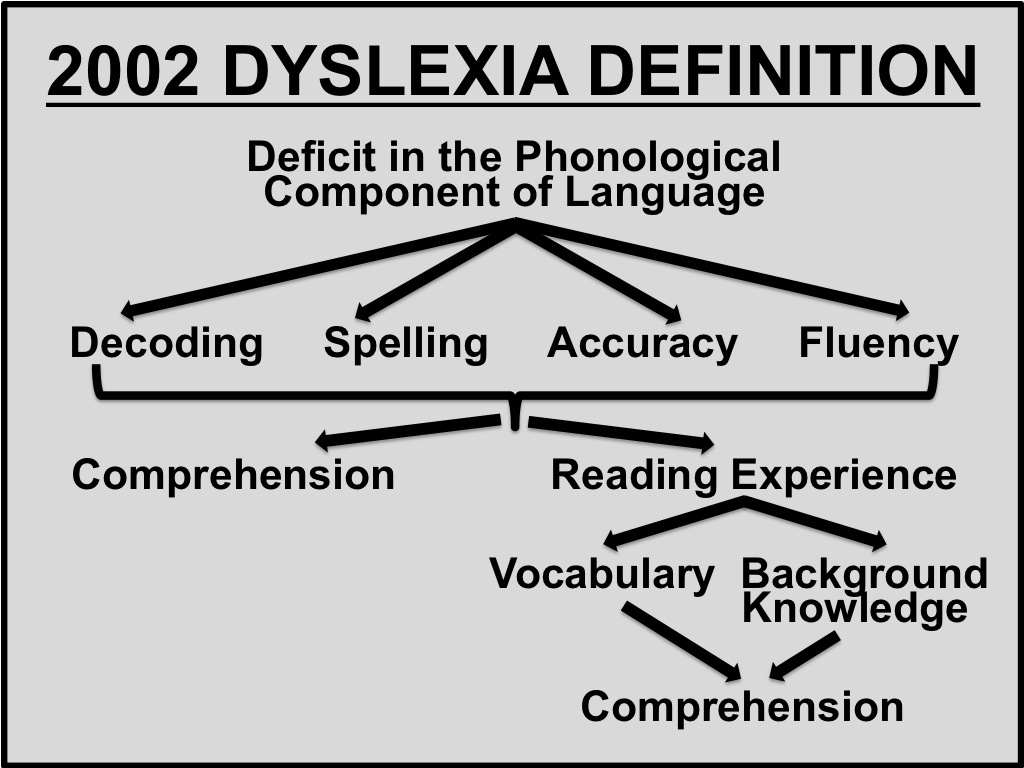
A  revised detailed definition from the International Dyslexia Association is, “Dyslexia is a specific learning disability that is neurobiological in origin. It is characterized by difficulties with accurate and/or fluent word recognition and by poor spelling and2002-dyslexia-definition decoding abilities. These difficulties typically result from a deficit in the phonological component of language that is often unexpected in relation to other cognitive abilities and the provision of effective classroom instruction. Secondary consequences may include problems in reading comprehension and reduced reading experience that can impede growth of vocabulary and background knowledge.” Continue reading “Dyslexia.”

A little bit about Kathy

This is the post excerpt.

My name is Kathy Grant and I am a Certified Barton Tutor. I am certified through the Masters level, which means all 10 levels of the Barton Reading & Spelling System. I work with students of all ages, starting at 5.5 years.

Image result for free images of books

Reading is a skill. Just like riding  a bike, hitting a ball, and swimming, reading  is a skill that needs to be mastered. For 80% of the population, after a year or two of learning to read, they are off and reading books on their own.  However, for the other 20% of the population, no matter how hard they work or practice in school and at home, they cannot seem to master the skill of reading.

My hope is that this blog will be a place of encouragement, inspiration, answered questions and most of all,  a place of hope for the struggling reader, of any age, and their family.